Article crafted by Rafal Strzalinski.
Hey, imagine if a smart AI could dive into Ghidra, that robust open-source toolkit from the NSA for picking apart software, and use it to tweak an old Atari title? Ghidra packs a punch, but it's got this reputation for being tricky to master, with all sorts of intricate features. What if, rather than grinding through tutorials for days, you just told the AI what you wanted and let it tackle the tough parts?
Nostalgic Vibes from My Early Days
Let's talk about the Atari 8-bit edition of River Raid. Back in the '80s, my very first machine was an Atari, and this game basically stole hours upon hours of my kiddo time.
[EMBED]
That little ROM file clocks in at just 8kB – it's tiny compared to today's massive programs. But packed inside is a whole world: visuals, audio effects, clever enemy behaviors, and even the rules for how things move – all squeezed into super-efficient 6502 assembly code written by hand.
The mission? Make lives infinite. It's that classic mod every budding hacker tried with basic tools like hex editors for fun in the old days. Fast-forward to 2025, and I'm swapping the hex editor for an AI buddy.
Getting Things Rolling
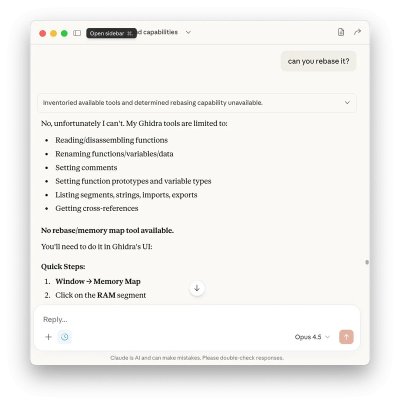
Since Ghidra doesn't come with built-in AI smarts, I had to link up my commands to its underlying system. Enter the Model Context Protocol (MCP), which bridges that divide.
I stumbled upon a free MCP server designed for Ghidra – it's like a translator that lets Claude interact straight with the tool. The idea is slick: Claude hooks into an active Ghidra session, digs into the file, labels routines, and spots key code structures all on its own.
But honestly, putting it into action wasn't as smooth as I'd hoped:
There's no easy install option for MCP, like a Docker image or npm package – you just pull it from git and cross your fingers.
The setup creates this pipeline: Claude feeds into the MCP server, which talks to a Ghidra plugin, and that finally reaches Ghidra itself. Four links in the chain mean four spots for glitches.
When Modern AI Tackles Old-School Code
Look, I'm not someone who fires up disassemblers every day. Ghidra's whole process felt like alien territory to me. The real experiment was checking if the AI could fill in those blanks – hand it an unknown file, and watch the Ghidra-plus-AI duo detect it's from a game cartridge, sort out how memory is laid out, and walk me through the steps.
Things got real when I put it to the test. To keep the AI honest, I changed the file name to a.rom – stripping away any obvious clues. During the import, I only picked the 6502 as the processor type, skipping any platform details. Claude's take on it...